- Ratan Tata says Radia tapes a smokescreen
- Ratan Tata, the chairman of India’s largest conglomerate, has described the media frenzy over the tape leaks featuring conversations between Niira Radia, the owner of a public relations agency, and prominent politicians, industrialists and journalists as a “smokescreen” which was deflecting attention from bigger scandals.
- Mr Tata suggests that the real scandal was out-of-turn allocation of spectrum and what he described as the “hoarding” of spectrum by some telecom companies. Mr Tata said the government should hold a proper investigation to book the guilty.
- The tapes feature conversations between Ms Radia, Mr Tata and other industrialists, politicians and journalists. The tapes suggest that Ms Radia was lobbying for the continuation of Mr Raja as telecom minister after the 2009 elections.

Showing posts with label Current Affairs. Show all posts
Showing posts with label Current Affairs. Show all posts
Sunday, November 28, 2010
Indian Round UP - 27th Nov
Politics & the Nation


Friday, November 26, 2010
Weekly Round Up - 25th Nov - Indian Current Affairs
Politics & the Nation
- Nitish Wins in Bihar
- The JDU combine won 203 seats in the 243 seat assembly. Some excellent commentary / observations on the emphatic victory scored by Nitsh Kumar in Bihar:
- He ran his political campaign in Bihar on just two words: development and governance. And the response from the voters was historic: a seismic shift in the political mood among voters.
Monday, November 22, 2010
GK
1. RBI has approved the merger of ‘Bank of Rajasthan ‘with _____ bank?
2. Who got the 2010 Commonwealth Writers Prize for the book ‘Solo’?
3. Which day has been observed as the International Day of Older Persons(IDOP)?
4. What is the India’s rank in the new Global Hunger Index by the International Food Policy Research Institute?
Friday, November 19, 2010
Facts About India
India never invaded any country in her last 100000 years of history.- When many cultures were only nomadic forest dwellers over 5000 years ago, Indians established Harappan culture in Sindhu Valley (Indus Valley Civilization)
- The name 'India' is derived from the River Indus, the valleys around which were the home of the early settlers. The Aryan worshippers referred to the river Indus as the Sindhu.
- The Persian invaders converted it into Hindu. The name 'Hindustan' combines Sindhu and Hindu and thus refers to the land of the Hindus.
- Chess was invented in India.
- Algebra, Trigonometry and Calculus are studies, which originated in India.
- The 'Place Value System' and the 'Decimal System' were developed in India in 100 B.C.
Thursday, November 18, 2010
General Knowledge
1. Who among the following has been appointed the National
Security Adviser by the UPA Government ?
 (a) Brajesh Mishra
 (b) J. N. Daxit
 (c) Soli J. Sorabjee
 (d) T. K. A. Nair
 Ans: ( b ) J. N. Daxit

2. Who among the following is the new Chief Minister of
Karnataka ?
 (a) S. M. Krishna
 (b) Uma Bharti
 (c) Dharam Singh
 (d) Y. S. Rajasekhara Reddy
 Ans: ( c ) Dharam Singh

3. Who among the following has won the Miss Universe 2004
crown ?
 (a) Jennifer Hawkins
 (b) Shandi Finnessey
 (c) Alba Reyes
 (d) None of these
 Ans: ( a ) Jennifer Hawkins

4. A solemn ceremony to mark the 60th Anniversary of D-Day
landings of the Allies troops during the Second World War,
was held in
 (a) Pearl Harbour
 (b) Normandy
 (c) New York
 (d) Lisbon
 Ans: ( b ) Normandy

5. Which of the following cricketers holds the world record
of maximum number of sixes in Tests ?
 (a) Chris Carins (New Zealand)
 (b) Viv Richards (West Indies)
 (c) Sachin Tendulkar (India)
 (d) Wasim Akram (Pakistan)
 Ans: ( a ) Chris Carins (New Zealand)

6. Who among the following has been appointed the new Chief
Justice of India ?
 (a) Justice Rajendra Babu
 (b) Justice V. N. Khare
 (c) Justice R. C. Lahoti
 (d) None of these
 Ans: ( c ) Justice R. C. Lahoti

7. Who among the following sports persons got the honour of
lighting the Olympic flame at the Major Dhyan Chand Stadium
in New Delhi recently ?
 (a) Anjali Bhagwat
 (b) Abhinav Bindra
 (c) Viswanathan Anand
 (d) K. M. Beenamol
 Ans: ( a ) Anjali Bhagwat

8. Who among the following has been appointed new chairman
of the National Commission for Farmers ?
 (a) Ajit Singh
 (b) K. C. Pant
 (c) Dr. M. S. Swaminathan
 (d) Sharad Pawar
 Ans: ( c ) Dr. M. S. Swaminathan

9. Which of the following planets crossed the face of the
sun (in transit) after 122 years recently ?
 (a) Mars
 (b) Venus
 (c) Jupiter
 (d) Saturn
 Ans: ( b ) Venus

10. Which of the following countries was readmitted to the
Commonwealth recently ?
 (a) Nepal
 (b) Myanmar
 (c) Pakistan
 (d) None of these
 Ans: ( c ) Pakistan

11. The world governing body of which of the following
sports celebrated its 100 years in existence recently ?
 (a) Football
 (b) Hockey
 (c) Badminton
 (d) Cricket
 Ans: ( a ) Football

12. Who among the following won the men?s singles title of
the French Open 2004 ?
 (a) Guillermo Coria
 (b) Roger Federer
 (c) Andy Roddick
 (d) Gaston Gaudio
 Ans: ( d ) Gaston Gaudio

13. Who is India?s first Woman Grand Master in Chess ?
 (a) Aarthie Ramaswamy
 (b) Koneru Humpy
 (c) S. Meenakshi
 (d) S. Vijayalakshmi
 Ans: ( b ) Koneru Humpy

14. The age of a tree can be determined by
 (a) Measuring its height
 (b) Measuring its diameter
 (c) Analyzing its sap
 (d) Counting the annual growth rings of its stem
 Ans: ( d ) Counting the annual growth rings of its stem

15. Which one of the following pairs is not correctly matched ?
 Mountains   Continents
 (a) The Rocky  : North America
 (b) The Andes  : South America
 (c) The Alps  : Europe
 (d) The Ural  : Africa
 Ans: ( d ) The Ural  : Africa

16. Which of the following pairs is correctly matched ?
 (a) ?Purna Swaraj? Resolution  : 1929
 (b) Martyrdom of Sardar Bhagat Singh : 1931
 (c) Formation of the Congress Socialist Party: 1939
 (d) Simla Confeence   : 1940
 Ans: ( b ) Martyrdom of Sardar Bhagat Singh : 1931

17. The Lingaraja Temple built during the medieval period is at
 (a) Bhubaneswar
 (b) Khajuraho
 (c) Madurai
 (d) Mount Abu
 Ans: ( a ) Bhubaneswar

18. Which one of the following is essentially a solo dance ?
 (a) Kuchipudi
 (b) Kathak
 (c) Manipuri
 (d) Mohiniattam
 Ans: ( d )  Mohiniattam

19. The deepest oceanic trench ?Mariana? is located in
 (a) Atlantic Ocean
 (b) Arctic Ocean
 (c) Pacific Ocean
 (d) Indian Ocean
 Ans: ( c ) Pacific Ocean

20. Although fog consists of fine drops of water, we cannot
see clearly through it because
 (a) The light rays undergo total internal reflection in the
drops
 (b) Fine drops of water in fog polarize the light
 (c) The fine drops are opaque to the light
 (d) The drops scatter most of the light
 Ans: ( d ) The drops scatter most of the light

21. During the Mughal period, which one of the following
were the first to come to India as traders ?
 (a) Portuguese
 (b) Dutch
 (c) Danish
 (d) English
 Ans: ( a ) Portuguese

22. Who among the following Delhi Sultans is known for
introducing market control mechanism ?
 (a) Iltutmish
 (b) Balban
 (c) Alauddin Khalji
 (d) Firoze Tughlaq
 Ans: ( c ) Alauddin Khalji

23. Which one of the following mountain peaks of the
Himalayas is NOT in India ?
 (a) Annapurna
 (b) Nanda Devi
 (c) Mt. Kamet
 (d) Kanchenjunga
 Ans: ( a ) Annapurna

24. A rift valley is formed mainly due to
 (a) The forces of tension in the earth?s crust
 (b) The subsidence of the floor of a river valley
 (c) The valley formed after the formation of fold mountains
 (d) The deepening of a valley by ice action
 Ans: ( a ) The forces of tension in the earth?s crust

25. Who is the author of the book, ?The Man Who Divided India? ?
 (a) Arun Shourie
 (b) Dominique Lapierre
 (c) Rafiq Zakaria
 (d) Salman Rushdie
 Ans: ( c ) Rafiq Zakaria
Banking Terms
1. What is a Repo Rate?
A: Repo rate is the rate at which our banks borrow rupees from RBI. Whenever the banks have any shortage of funds they can borrow it from RBI. A reduction in the repo rate will help banks to get money at a cheaper rate. When the repo rate increases, borrowing from RBI becomes more expensive.
2. What is Reverse Repo Rate?
A: This is exact opposite of Repo rate. Reverse Repo rate is the rate at which Reserve Bank of India (RBI) borrows money from banks. RBI uses this tool when it feels there is too much money floating in the banking system. Banks are always happy to lend money to RBI since their money is in safe hands with a good interest. An increase in Reverse repo rate can cause the banks to transfer more funds to RBI due to this attractive interest rates.
3. What is CRR Rate?
A: Cash reserve Ratio (CRR) is the amount of funds that the banks have to keep with RBI. If RBI decides to increase the percent of this, the available amount with the banks comes down. RBI is using this method (increase of CRR rate), to drain out the excessive money from the banks.3
4. What is SLR Rate?
A: SLR (Statutory Liquidity Ratio) is the amount a commercial bank needs to maintain in the form of cash, or gold or govt. approved securities (Bonds) before providing credit to its customers.
SLR rate is determined and maintained by the RBI (Reserve Bank of India) in order to control the expansion of bank credit. SLR is determined as the percentage of total demand and percentage of time liabilities. Time Liabilities are the liabilities a commercial bank liable to pay to the customers on their anytime demand. SLR is used to control inflation and propel growth. Through SLR rate tuning the money supply in the system can be controlled efficiently.
5. What is Bank Rate?
A: Bank rate, also referred to as the discount rate, is the rate of interest which a central bank charges on the loans and advances that it extends to commercial banks and other financial intermediaries. Changes in the bank rate are often used by central banks to control the money supply.
6. What is Inflation?
A: Inflation is as an increase in the price of bunch of Goods and services that projects the Indian economy. An increase in inflation figures occurs when there is an increase in the average level of prices in Goods and services. Inflation happens when there are fewer Goods and more buyers; this will result in increase in the price of Goods, since there is more demand and less supply of the goods.
7. What is Deflation?
A: Deflation is the continuous decrease in prices of goods and services. Deflation occurs when the inflation rate becomes negative (below zero) and stays there for a longer period.
8. What is PLR?
A: The Prime Interest Rate is the interest rate charged by banks to their most creditworthy customers (usually the most prominent and stable business customers). The rate is almost always the same amongst major banks. Adjustments to the prime rate are made by banks at the same time; although, the prime rate does not adjust on any regular basis. The Prime Rate is usually adjusted at the same time and in correlation to the adjustments of the Fed Funds Rate. The rates reported below are based upon the prime rates on the first day of each respective month. Some banks use the name "Reference Rate" or "Base Lending Rate" to refer to their Prime Lending Rate.
9. What is Deposit Rate?
A: Interest Rates paid by a depository institution on the cash on deposit.
Policy Rates:
· Bank Rate: 6.00%
· Repo Rate: 5.25%
· Reverse Repo Rate: 3.75%
Reserve Ratios:
· CRR: 6.00%
· SLR: 25.0%
Lending/Deposit Rates:
· PLR: 11.00%-12.00%.
· Deposit Rate: 6.00%-7.50%.
. Savings Bank rate: 3.5%.
Note: Rates as on 14-05-10.
10. What is FII?
A: FII (Foreign Institutional Investor) used to denote an investor, mostly in the form of an institution. An institution established outside India, which proposes to invest in Indian market, in other words buying Indian stocks. FII's generally buy in large volumes which has an impact on the stock markets. Institutional Investors includes pension funds, mutual funds, Insurance Companies, Banks, etc.
11. What is FDI?
A: FDI (Foreign Direct Investment) occurs with the purchase of the “physical assets or a significant amount of ownership (stock) of a company in another country in order to gain a measure of management control” (Or) A foreign company having a stake in a Indian Company.
12. What is IPO?
A: IPO is Initial Public Offering. This is the first offering of shares to the general public from a company wishes to list on the stock exchanges.
13. What is Disinvestment?
A: The Selling of the government stake in public sector undertakings.
14. What is Fiscal Deficit?
A: It is the difference between the government’s total receipts (excluding borrowings) and total expenditure. Fiscal deficit in 2009-10 is proposed at 6.8% of GDP.
15. What is Revenue deficit?
A: It defines that, where the net amount received (by taxes & other forms) fails to meet the predicted net amount to be received by the government. Revenue deficit in 2009-10 is proposed at 4.8% of GDP.
16. What is GDP?
A: The Gross Domestic Product or GDP is a measure of all of the services and goods produced in a country over a specific period; classically a year. GDP during 2008-09 is 6.7%.
17. What is GNP?
A: Gross National Product is measured as GDP plus income of residents from investments made abroad minus income earned by foreigners in domestic market.
18. What is National Income?
A: National Income is the money value of all goods and services produced in a country during the year.
19. What is Per Capita Income?
A: The national income of a country, or region, divided by its population. Per capita income is often used to measure a country's standard of living.Per capita income during 2008-09 estimated by CSO: Rs.25, 494.
20. What is Vote on Account?
A: A vote-on account is basically a statement ,where the government presents an estimate of a sum required to meet the expenditure that it incurs during the first three to four months of an election financial year until a new government is in place, to keep the machinery running.
21. Difference between Vote on Account and Interim Budget?
A: Vote-on-account deals only with the expenditure side of the government's budget, an interim Budget is a complete set of accounts, including both expenditure and receipts.
22. What is SDR?
A: The SDR (Special Drawing Rights) is an artificial currency created by the IMF in 1969. SDRs are allocated to member countries and can be fully converted into international currencies so they serve as a supplement to the official foreign reserves of member countries. Its value is based on a basket of key international currencies (U.S. dollar, euro, yen and pound sterling).
23. What is SEZ?
A: SEZ means Special Economic Zone is the one of the part of government’s policies in India. A special Economic zone is a geographical region that economic laws which are more liberal than the usual economic laws in the country. The basic motto behind this is to increase foreign investment, development of infrastructure, job opportunities and increase the income level of the people.
Nobel Prize Winners 2010
Every year since 1901 the Nobel Prize has been awarded for achievements in physics, chemistry, physiology or medicine, literature and for peace. The Nobel Prize in Economics was first awarded in the year 1969. The Nobel Prize is an international award administered by the Nobel Foundation in Stockholm, Sweden. Each recipient, or laureate, is presented with a gold medal, a diploma, and a sum of money which depends on the Nobel Foundation's income that year.
List of 2010 Nobel Prize Winners:
· The Nobel Prize in Peace has been given to Liu Xiaobo "for his long and non-violent struggle for fundamental human rights in China".

· The Nobel Prize in Medicine has been given to Robert G. Edwards "for the development of in vitro fertilization".

· The Nobel Prize in Literature has been given to Mario Vargas Llosa "for his cartography of structures of power and his trenchant images of the individual's resistance, revolt, and defeat".

· The Nobel Prize in Physics has been given to Andre Geim and Konstantin Novoselov "for groundbreaking experiments regarding the two-dimensional material graphene".

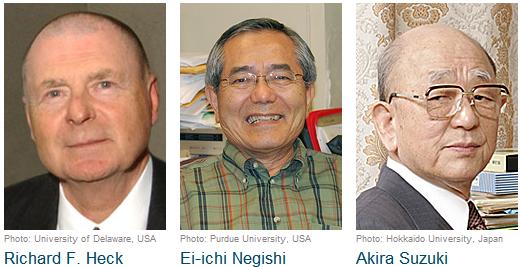
· The Nobel Prize in Chemistry has been given to Richard F. Heck, Ei-ichi Negishi and Akira Suzuki "for palladium-catalyzed cross couplings in organic synthesis"
· The Nobel Prize in Economic Sciences has been given to Peter A. Diamond, Dale T. Mortensen and Christopher A. Pissarides "for their analysis of markets with search frictions".

Tuesday, November 16, 2010
News Roundup - 16th Nov
Politics & the Nation
- A very sane editorial comment on the Raja episode and how should move from there.
- Take a look at it here.
- Pakistan is a source of fake Indian currency
- The annual inflow of fake Indian currency from Pakistan is estimated at Rs 100 crore. Of every Rs 100 fake note pumped into India, Rs 70 of white Indian money returns to Pakistan. This, the Indian agencies believe, is used to finance terror activities.
- The necessity of taking geograpical consideratons into economic computations
- Cross-country econometric models have focused only on GDP per capita as a variable to be explained. For eg., our telecom auctioning process takes into account 'revenue potential' as a factor to grade various circles as A, B and C categories. The authors convincingly argue for a system of categorization based on GDP density, because the potential for recovering the cost of service provision in the poor revenue potential circles is turning out to be better than what is perceived to be the case.
- Take a look at this interesting essay. But some excerpts for our record:
- John Gallup, Jeffrey Sachs and Andrew Mellinger in 1999 introduced the concept of ‘GDP density’, calculated by multiplying GDP per capita by the number of people per square kilometre. Defined in this way, GDP density is a measure of economic activity by area. One of the original purposes for deriving this measure was to study the role of geography in economic development. As described by Sachs, et al, one finding is that the great majority of the poorest countries lie in the geographical tropics, the area between the Tropic of Cancer and the Tropic of Capricorn. In contrast, most of the richest countries lie in the temperate zones as well as along coastal areas.
- Vodafone gets 3 weeks to deposit Rs.2.5k cr with SC
- As you all know by now, Vodafone is slapped with a tax demand of more than Rs. 11,000 crore by the IT department. It has approached the Supreme Court contesting the demand. The SC asked it to deposit Rs. 2,500 crore in three weeks and furnish bank guarantees worth Rs. 8,500 crore in eight weeks. This is a setback for the company.
- The apex court will now hear the case on February 24, 2011.
- Import growth at 7-yr low of 6.8% in Oct
- India's import growth plummeted to 6.8% in October from a year ago, lowest in seven years, reinforcing the perception that India’s domestic economy was slowing down, but exports continued to grow at a fast rate, indicating an improving external environment.
- New ground handling policy to be implemented from January
- The civil aviation ministry has decided to roll out the new ground-handling policy in January 2011 despite hectic lobbying by private airlines, ushering in a quiet revolution in quality of support services at airports across the country.
- The new policy will eliminate deployment of outsourced manpower and restrict the number of service providers operating at airports -- improving service standards, safety and security. In the bargain, private airlines will lose their right to carry out their own ground-handling, instead hiring national carrier Air India or independent agencies nominated by airport operators.
- The value of ground-handling business at airports across the country is estimated to be Rs 1,000 crore, and is now divided among a large number of small agencies.
- Ground-handling services include checkin, baggage handling, cargo handling, aircraft cleaning, loading and unloading of food & beverages on aircraft, proving electricity back-up to aircraft while they are at airports, supplying water to aircraft, ferrying passengers to and from planes and maintaining toilets.
- As of now, airlines are allowed to handle these services on their own, but many nominate outside agencies, rather than using approved ground-handling service available at airports. The nominated agencies in turn outsource staff from manpower suppliers. The home ministry, security agencies and the bureau of civil aviation security (BCAS) feel that deployment of such a large number of contract employees could pose a security threat. A key aspect often blamed for 9-11 terrorist attacks in New York is security loopholes at American airports, which allowed arms to be carried on board passenger aircraft. Similarly, hijack of an Indian aircraft which took off from Kathmandu in 1999 was primarily on account of arms being smuggled in. Therefore, a new policy on groundhandling, mandating use of full-time staff by a limited number of agencies, was recommended by the Cabinet Committee on Security (CCS) and approved by Parliament in 2007.
- Cheaper food keeps inflation down at 8.58%
- Inflation declined marginally to a 10-month low of 8.58% in October, prompting policymakers to proclaim victory in their effort to cool prices, but economists remained sceptical saying the fight is far from over.
- The decline was mainly due a fall in food inflation to 14.13% from 15.71% in September and the base effect, or higher inflation of last year.
- Sovereign wealth funds invest in the India story
- Sovereign wealth funds from Norway to Abu Dhabi are increasing bets on India by buying into Coal India and Power Grid issues as they increase their share of emerging market assets when the West is grappling with shaky sovereign ratings and tepid growth.
- There are some 60-odd sovereign funds that have a direct account to invest in Indian equities through their registration with the market regulator, Sebi. These funds have traditionally been active investors in the secondary market. High secondary valuations, the disinvestment ministry’s sales pitch and prospects of getting a huge block drew them.
- Foreign institutional investors own $118 billion net of sales in Indian equities, according to Sebi data.
- Sovereign funds are chasing countries with stable policies and strong economic growth. With Indian state-owned companies seen as stable ones and when attractively priced, they draw top investors.
- Titbit on commodity exchanges in the country
- About Rs. 33,000 crore worth of commodity futures are traded every day on the five exchanges currently operational -- MCX, NCDEX, NMCE, R-ADAG's ICEX and Kotak-promoted ACE Derivatives & Commodity Exchange. This is about one-fifth of the volumes traded on Indian stock exchanges. It's a big business and volumes could one day exceed those on the stock market.
- In all, five national exchanges are up and running, one is expected to come up in a year, and two are waiting for approval.
- nub: Noun
- The choicest or most essential or most vital part of some idea or experience
- eg: The nub of ED’s case is that if the licences awarded were illegal, then the money received from selling stakes in them could also be tainted.
- hoofing: Noun
- dancing in which the steps are more important than gestures or postures
Saturday, November 13, 2010
IPO | Initial Public Offering |
IPS | Indian Police Service; Inter Press Service |
IQ | Intelligence Quotient |
IRC | International Red Cross |
IRDP | Integrated Rural Development Programme |
IRS | Indian Revenue Service |
ISBN | International Standard Book Number |
ISDN | Integrated Services Digital Network |
ISI | Indian Standards Institution; Inter Services Intelligence |
ISKCON | International Society for |
ISO | International Standards Organisation |
ISRO | Indian Space Research Organisation |
IST | Indian Standard Time |
ITBP | Indo-Tibetan Border Police |
ITES | Information Technology enabled services |
ITI | Indian Telephone Industries Industrial Training Institute |
ITU | International Telecommunication |
IVF | In-Vitro Fertilisation |
IVM | In-vitro Maturation |
JCO | Junior Commissioned Officer |
JEE | Joint Entrance Examination |
JPEG | Joint Photographic Expert Group |
LASER | Light Amplification by Stimulated Emission of Radiation |
LCA | Light Combat Aircraft |
LCD | Liquid Crystal Display Least Common Denominator |
LCM | Lowest Common Multiple |
LIC | Life Insurance Corporation (of |
LLB | Bachelor of Laws |
LMC | Large Megallanic Cloud |
LTTE | Liberation Tigers of Tamil |
M.A. | Magisiter Artium (Master of Arts) |
M.D | Doctor of Medicine |
MBA | Master of Business Administration |
MBBS | Bachelor of Medicine and Bachelor of Surgery |
MCC | Marylebone Cricket Club |
MCI | Medical Council of |
MICR | Magnetic ink character recognition |
Musical Instrument Digital Interface | |
MIPS | Million Instructions per Second |
MIT | Massachusetts Institute of Technology; Master Instruction Tape |
MLA | Member of Legislative Assembly |
MNC | Multi-National Corporation |
MODEM | modulator demodulator |
MP | Member of Parliament; Madhya Pradesh |
MPEG | Motion Picture Experts Group |
MRCP | Member of the |
MTCR | Missile Technology Control Regime |
MVC | Maha Vir Chakra |
NAAC | National Assessment and Accreditation Council |
NABARD | National Bank for Agriculture and Rural Development |
NAFED | National Agricultural Co-operative Marketing Federation |
NALCO | National Aluminium Company Ltd. |
NASA | National Aeronautics and Space Ad ministration |
NASDAQ | National Association of Securities Dealers Automated Quotation |
NASSCOM | National Association of Software and Service Companies |
NATO | |
NAV | Net Asset Value |
NCERT | National Council of Educational Research and Training |
NCSA | National Centre for Supercomputing Applications; National Computer Security Association |
NDA | |
NOC | No Objection Certificate |
NPA | Non-performing Assets |
NPT | Nuclear Non-Proliferation Treaty |
NRF | National Renewal Fund |
NSUI | National Students Union of |
NTPC | National Thermal Power Corporation |
OBC | Other Backward Classes |
OCR | Optical Character Recognition |
ONGC | Oil and Natural Gas Corporation |
OOP | Object Oriented Programme |
OPEC | Organisation of Petroleum Exporting Countries |
OSCAR | Orbiting Satellite Carrying Amateur Radio |
PAN | Permanent Account Number |
Ph.D. | Doctor of Philosophy (Philosophiae Doctor) |
PIL | Public Interest Litigation |
Subscribe to:
Posts (Atom)